

**Temperament, Puppy Development & Socialisation**
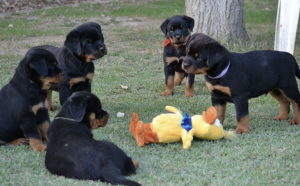
**Raising a Confident, Stable and Well-Balanced Rottweiler**
A Rottweiler is far more than a family pet. This remarkable breed combines intelligence, loyalty, confidence, strength and an instinctive desire to work alongside its owner. For these qualities to develop properly, every Rottweiler requires appropriate socialisation, guidance, training and leadership from an early age.
At Vanaheim Rottweilers, we place enormous importance on temperament. While genetics provide the foundation, a puppy’s environment, experiences and upbringing play a significant role in shaping the adult dog they become.
Understanding the key developmental stages of a puppy’s life allows owners to provide the support, structure and experiences needed to raise a confident, well-adjusted companion.
**The Importance of Leadership and Guidance**
Dogs thrive when they have clear expectations, consistency and structure.
While modern canine behavioural science has evolved beyond traditional “alpha” theories, one principle remains true: dogs look to trusted leaders for guidance and security.
A well-raised Rottweiler should:
* Respect household boundaries
* Respond to direction
* Remain calm in new situations
* Be confident without being reactive
* Understand household rules
* Enjoy working cooperatively with its family
Without guidance, many intelligent breeds will begin making their own decisions, which can lead to unwanted behaviours.
Strong leadership is not about force or intimidation. It is about providing clear communication, consistency, fairness and trust.
When owners establish structure from an early age, the Rottweiler develops into a reliable family companion capable of handling a wide range of situations confidently.
**The Goal of Socialisation**
Many people mistakenly believe socialisation simply means allowing a puppy to meet other dogs.
In reality, socialisation is the process of teaching a puppy how to navigate the world confidently and appropriately.
Effective socialisation helps puppies learn to:
* Remain calm around people
* Accept new environments
* Handle unfamiliar sounds
* Travel confidently
* Interact appropriately with other animals
* Recover quickly from new experiences
* Build resilience and confidence
The goal is not to expose the puppy to everything at once, but rather to create positive experiences that build confidence over time.
**The Critical Developmental Stages**
Every puppy passes through several important developmental periods. Understanding these stages helps owners support their puppy during times of rapid learning and behavioural change.
**Birth to 7 Weeks – The Foundation Stage**
During the first weeks of life, puppies learn important social skills from:
* Their mother
* Their littermates
* Their immediate environment
This stage teaches puppies:
* Bite inhibition
* Communication
* Social interaction
* Frustration tolerance
* Appropriate canine behaviour
Responsible breeders play a critical role during this period by providing a safe, stimulating environment and introducing age-appropriate experiences.
At Vanaheim Rottweilers, early neurological stimulation and careful social exposure begin long before puppies leave for their new homes.
**7 to 12 Weeks – The Primary Socialisation Period**
This is one of the most important stages in a puppy’s development.
During this period, puppies are highly receptive to learning and new experiences.
This is the ideal time to introduce:
* Different people
* Children
* Household noises
* Vehicles
* Different surfaces
* Grooming routines
* Veterinary handling
* New environments
Positive experiences during this stage often leave a lasting impression that carries into adulthood.
Training sessions should remain:
* Short
* Positive
* Reward-based
* Fun
Confidence is built through success, not pressure.
**8 to 16 Weeks – The First Fear Period**
Many puppies experience a temporary fear phase during this period.
A puppy that previously showed confidence may suddenly become cautious about:
* New objects
* Unfamiliar sounds
* New environments
* Certain people
This behaviour is completely normal.
During this stage:
* Remain calm
* Avoid forcing interactions
* Allow the puppy time to process new experiences
* Reward confidence
* Build trust
Most puppies naturally move through this phase with proper support and guidance.
**12 to 16 Weeks – Learning Household Structure**
As puppies become more confident, they begin exploring boundaries and learning how their family operates.
This is an excellent time to establish:
* House rules
* Crate training
* Lead walking
* Recall training
* Impulse control
* Basic obedience
Consistency from every family member is essential.
Puppies quickly learn what behaviours are rewarded and which are not.
Clear expectations during this stage help prevent behavioural issues later in life.
**4 to 6 Months – The Testing Stage**
Many owners notice their previously obedient puppy suddenly appears to become selective about listening.
This is a normal developmental stage.
During this period, puppies may:
* Become more independent
* Test boundaries
* Ignore commands occasionally
* Display increased confidence
Patience and consistency are crucial.
Continue reinforcing training while ensuring expectations remain fair and achievable.
**6 to 14 Months – The Second Fear Period**
Many adolescent dogs experience another temporary fear phase.
A dog may suddenly become cautious around:
* Familiar objects
* New environments
* Strange noises
* Unfamiliar people
This behaviour can seem unusual because the dog may have previously shown confidence around these same things.
Remain calm and supportive while encouraging confidence through positive experiences.
Avoid reinforcing fearful behaviour through excessive reassurance or emotional responses.
Your dog will often take emotional cues from you.
**12 to 24 Months – Adolescence**
Adolescence is often the most challenging period of raising a Rottweiler.
Physically, your dog may appear mature.
Mentally, however, they are still developing.
During this stage, many dogs display:
* Increased independence
* Stronger confidence
* Heightened awareness of their environment
* Greater interest in other dogs
* Testing of established boundaries
This is the stage where ongoing training becomes particularly important.
Owners should continue:
* Obedience training
* Socialisation
* Structured exercise
* Mental enrichment
* Leadership and consistency
The effort invested during adolescence often determines the quality of the adult dog.
**Building the Adult Rottweiler**
The first two years of a Rottweiler’s life are critical.
Through proper:
* Socialisation
* Leadership
* Training
* Structure
* Exercise
* Positive experiences
a puppy develops into the confident, stable and trustworthy adult the breed is renowned for.
A well-raised Rottweiler should be:
* Calm and confident
* Stable under pressure
* Loyal to its family
* Reliable in public
* Protective when necessary
* Socially appropriate
* Eager to learn
These qualities are achieved through a combination of sound genetics and responsible ownership.
**The Vanaheim Rottweilers Philosophy**
At Vanaheim Rottweilers, temperament is one of the most important factors in our breeding program.
We carefully select breeding dogs that demonstrate:
* Stable temperament
* Strong nerves
* Confidence
* Trainability
* Social stability
* Sound character
Our goal is to produce puppies that possess not only the physical qualities expected of the breed, but also the temperament required to become exceptional family companions, working dogs and lifelong partners.
Through responsible breeding, early socialisation and owner education, we strive to preserve the true character of the Rottweiler for future generations.
Because a great Rottweiler is not simply born—it is carefully raised, guided and developed into the remarkable dog the breed was always intended to be.